
Gym Retention Playbook
The Silent Exit: How Gym Owners Can Detect Inactive Members Before It's Too Late
Most gyms don't lose members on cancellation day. They lose them during the quiet inactivity window weeks earlier.
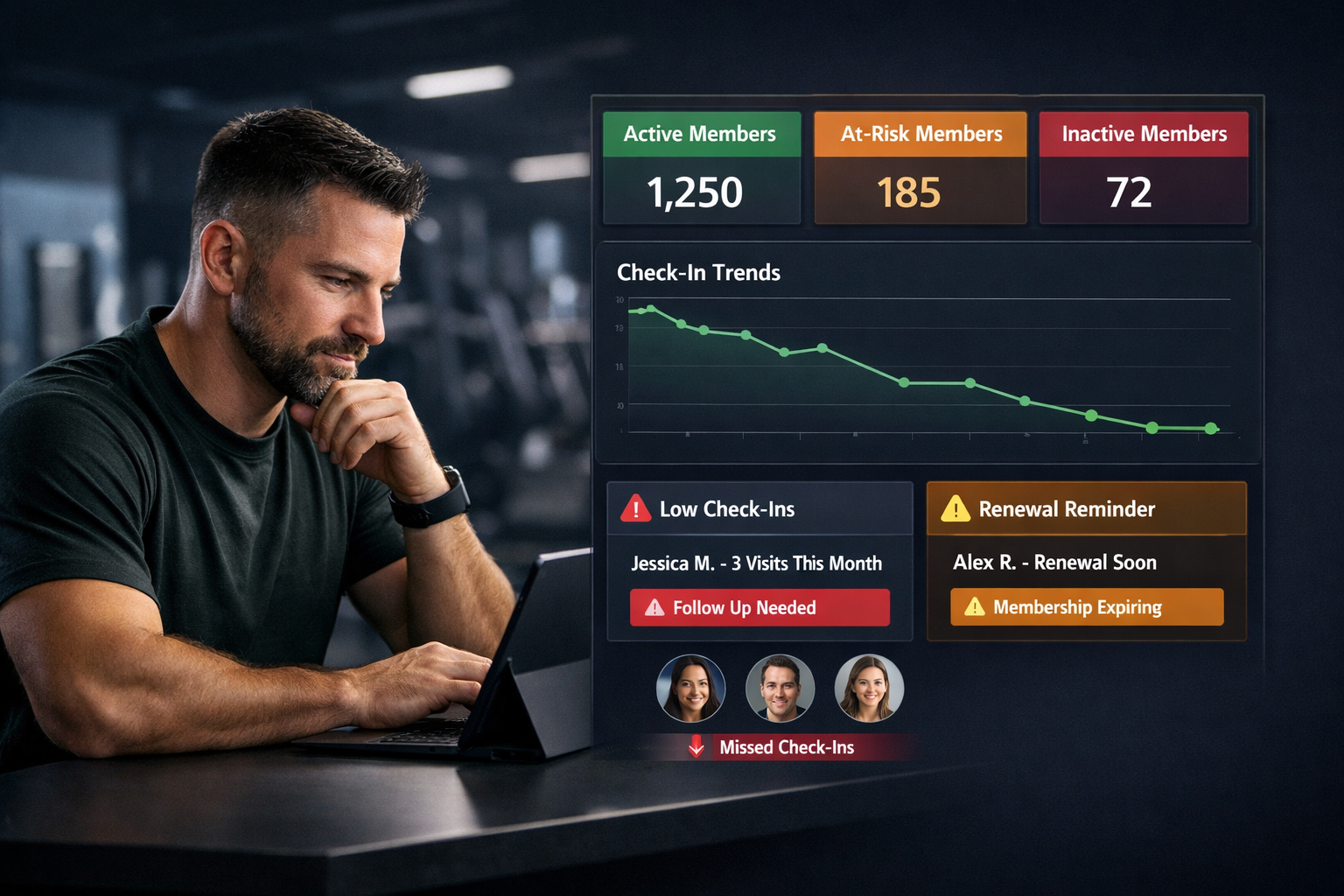
Your Member Wasn't Lost on Cancellation Day
Your gym did not lose that member the day they cancelled. You likely lost them three weeks earlier, when check-ins started dropping and nobody caught the pattern.
That is how gym churn works in real life: no complaint, no confrontation, just silence. A member who used to come four times a week drops to once, then disappears. By the time it shows up in renewals, the decision has already happened in their head.
The question is not whether your gym has inactive members right now. Every gym does. The real question is whether you can spot them before they are gone.
The Warning Signs Are Already in Your Data
The frustrating part is that most gyms already have the required data: visit logs, check-in records, renewal timelines. What is missing is a system that interprets behavior as risk.
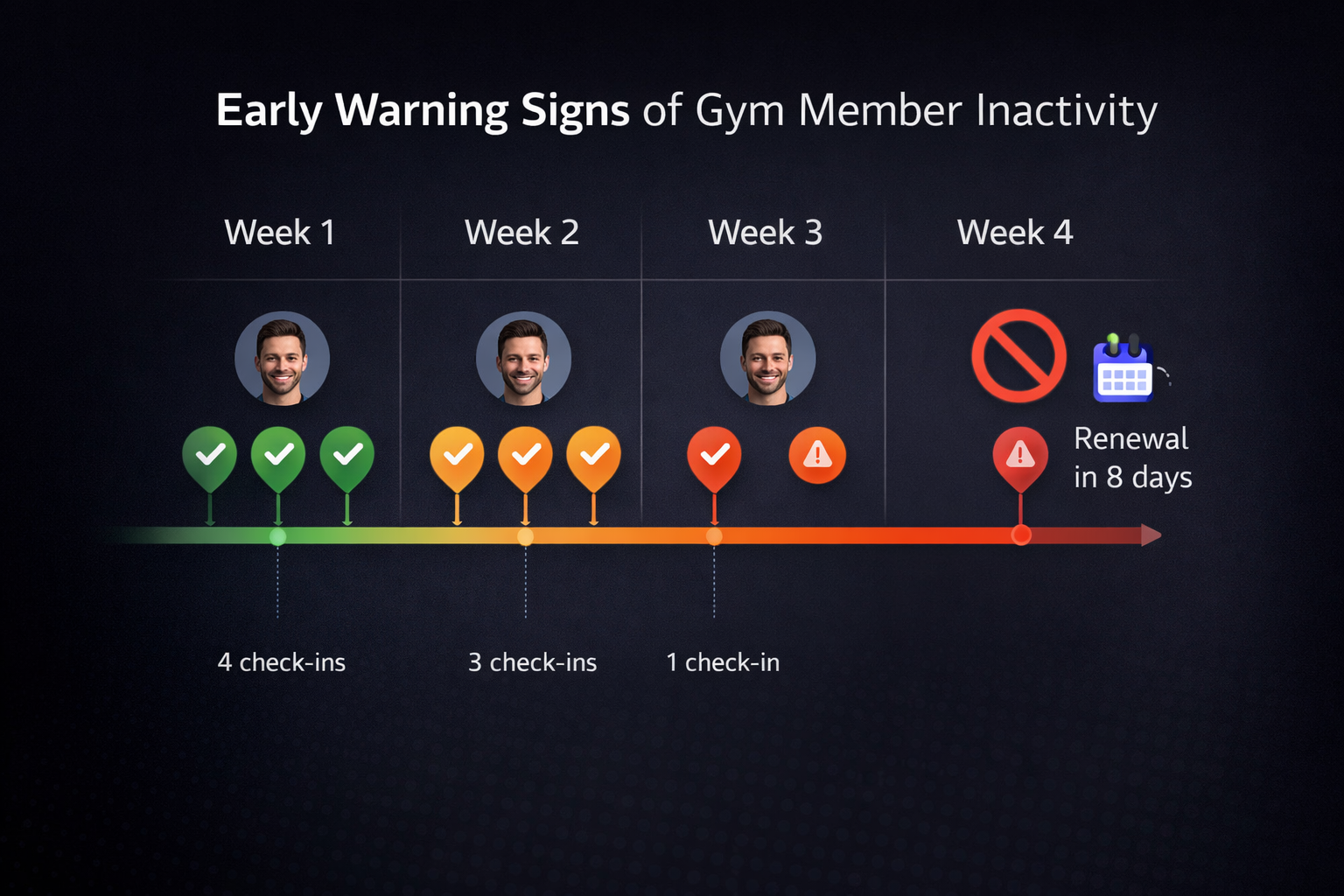
- Member visits drop from 4 days/week to 1 day/week.
- Renewal due in 8 days, but no check-in for 3 weeks.
- Consistent evening attendee suddenly goes missing.
These are not random blips. They are the predictable path to churn.
What This Quiet Drift Costs
Say your gym has 300 members paying ₹2,000/month. If 15% are drifting inactive at any point, that is 45 members at risk. Lose half of them and you lose ₹45,000/month, or more than ₹5 lakh/year.
And because you paid to acquire each member through ads, offers, or referrals, you now pay again to replace revenue that should have been retained. Retention is not only loyalty. It is capital efficiency.
Why Most Gyms Miss Inactive Members
Gym operators are busy running operations: classes, trainers, staffing, collections, walk-ins. Monitoring 300 individual attendance trajectories manually is not realistic.
So many teams default to complaint-driven retention: if someone is unhappy, they will say it. But disengaged members rarely complain. They quietly stop coming.
Renewal reminders help billing. They do not diagnose fading engagement.
The Smarter Approach: Read Behavior, Not Status
Shift from a static member list to a behavior map.
- Frequency dropping?
- Last check-in 16 days ago?
- Renewal due in 5 days with engagement halved?
Each pattern signals a different risk level, and each risk level needs a different response. Bulk offers to everyone are noisy. Targeted outreach to at-risk cohorts converts better and protects retention.
The 10-21 Day Inactivity Window Matters Most
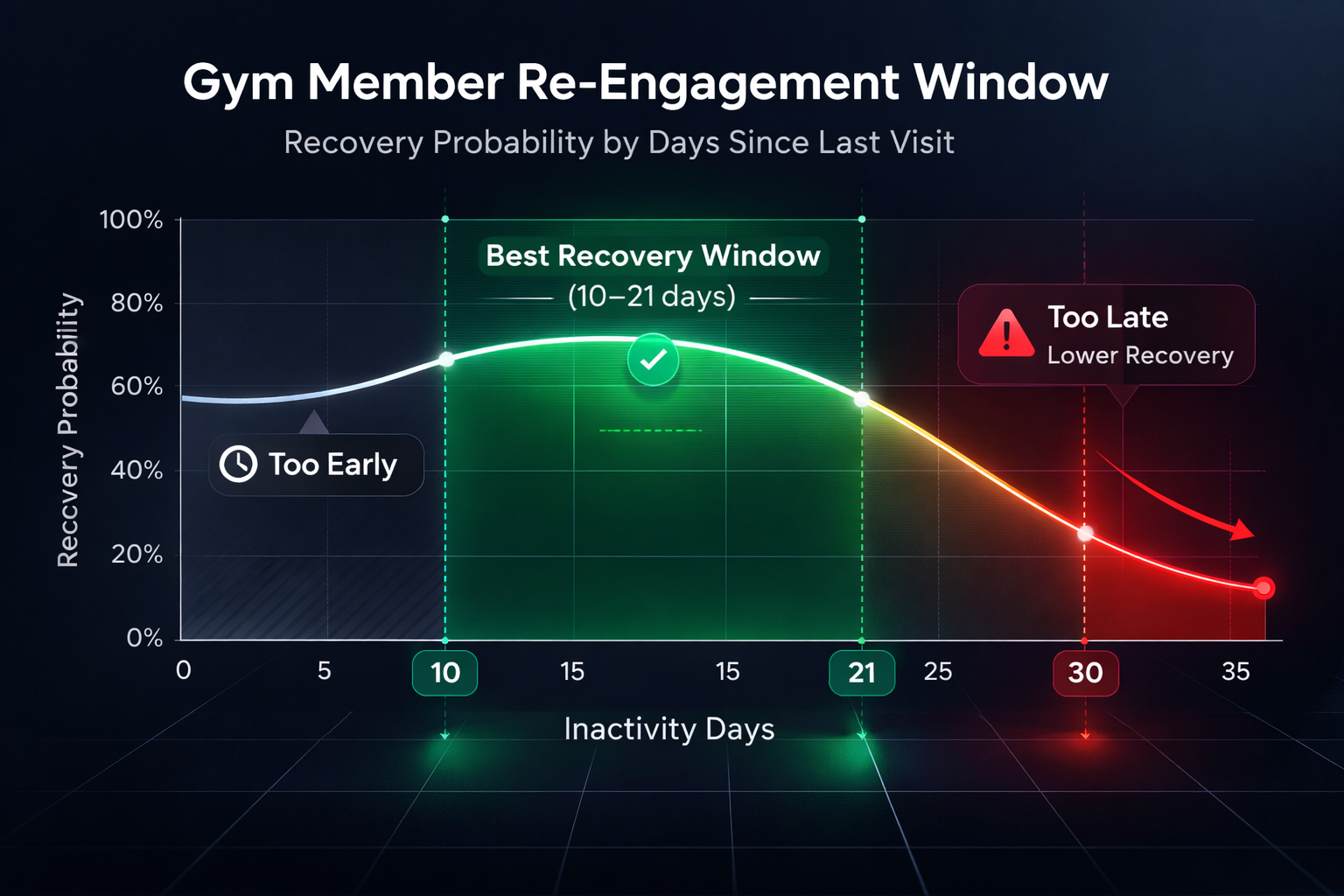
In many gyms, the best recovery window is around 10 to 21 days after a member goes inactive. Before day 10, intervention may be premature. After day 30, many members have already mentally moved on.
The right message in the right window drives higher comeback rates than late, generic outreach.
This Is Where Auto Re Engage Comes In
Auto Re Engage continuously reads member behavior patterns such as check-ins, visit frequency, and renewal proximity. It flags members who are slipping before they fully churn.
Instead of manual tracking and spreadsheet clean-up, you get a clear at-risk list and can send targeted WhatsApp outreach to the 20 to 30 members who need intervention now. Not a blast. A focused, timely, personal-feeling nudge.
Right member. Right message. Right moment.
What It Looks Like in Practice
A gym owner in Ahmedabad with 280 members assumed retention was healthy because new sales kept replacing exits. A behavior review showed 55 members had not visited in 15 days, and 12 of them had renewals due within two weeks.
After running targeted Auto Re Engage campaigns, 24 of the first 40 at-risk members returned within 10 days. Eleven renewed. Estimated recovered revenue: about ₹38,000 in one month.
The members were always recoverable. The difference was visibility and speed.
Key Takeaways
- Gym members rarely quit suddenly. They fade first.
- Signals are visible weeks before cancellation.
- The 10-21 day inactivity window is your highest-leverage intervention period.
- Targeted re-engagement outperforms bulk messaging.
- Recovering a member is almost always cheaper than acquiring a new one.
Frequently Asked Questions
How do I know if a gym member is inactive or just busy?
Compare their current check-in behavior to their own historical baseline. If a previously consistent member shows a sustained decline and renewal is near, treat it as at-risk behavior.
What should I send in a re-engagement message?
Keep it short, specific, and personal. Reference their routine, remind them of goals, and provide one clear next step such as booking a slot or returning for a class.
Can this work without changing my CRM?
Yes. Most gyms already have enough attendance and renewal data. The missing piece is behavior-based detection and consistent action.
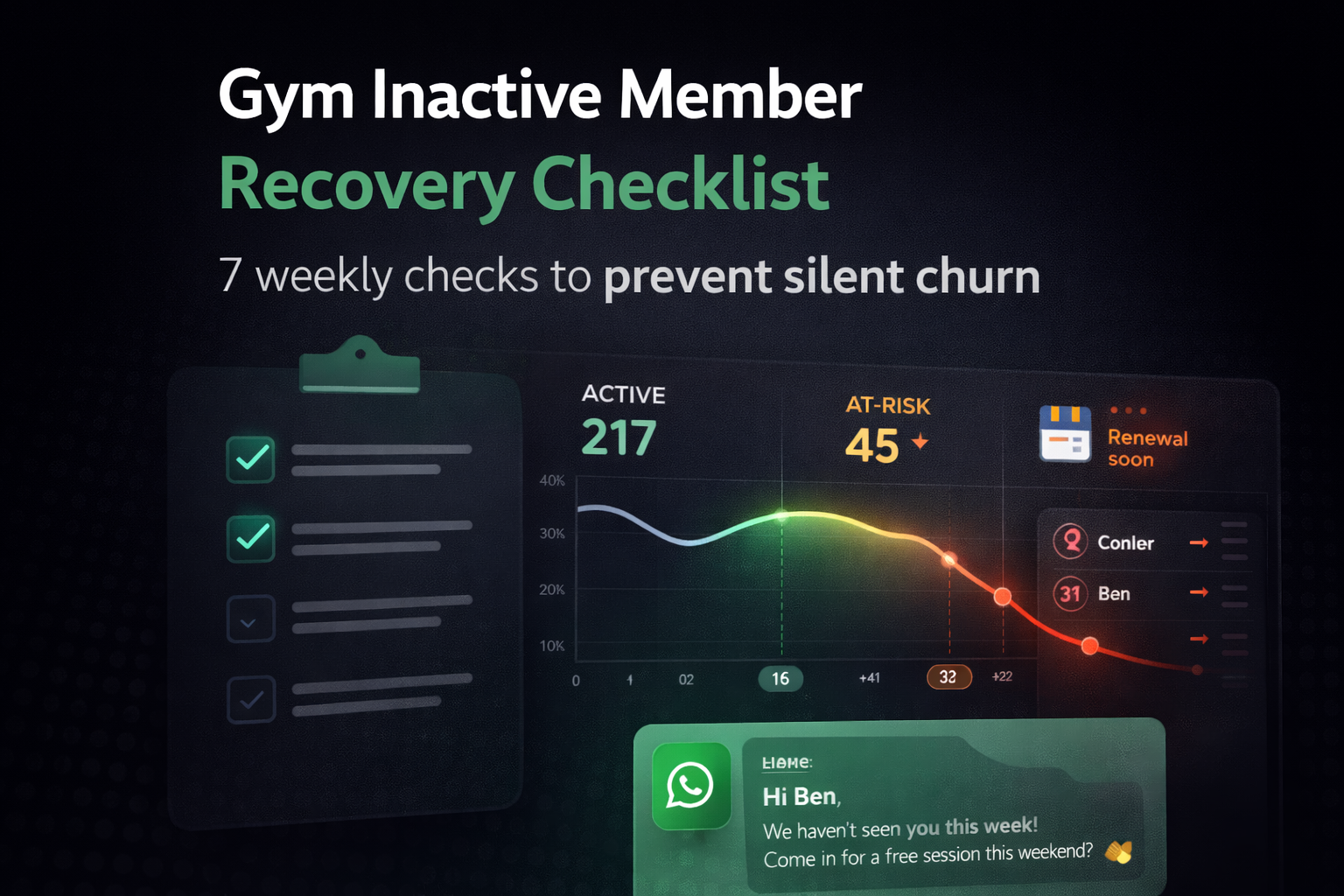
Your quietest members are your biggest opportunity
If your gym has 100+ members and no system watching inactivity, you are likely losing renewals in slow motion. Auto Re Engage turns passive member data into timely retention action.